The route follows the season, weather, light, crowds, and the rules of the place. The list below is a reference.
Please note:Temple, shrine, and private-property rules can change. They are checked before the day. Tickets, permits, and transport follow what the place requires.
Gion
One of the most intact old quarters. Stone lanes and townhouses suit kimono and solo portraits. Shirakawa Minami-dori is nearly empty early in the morning.
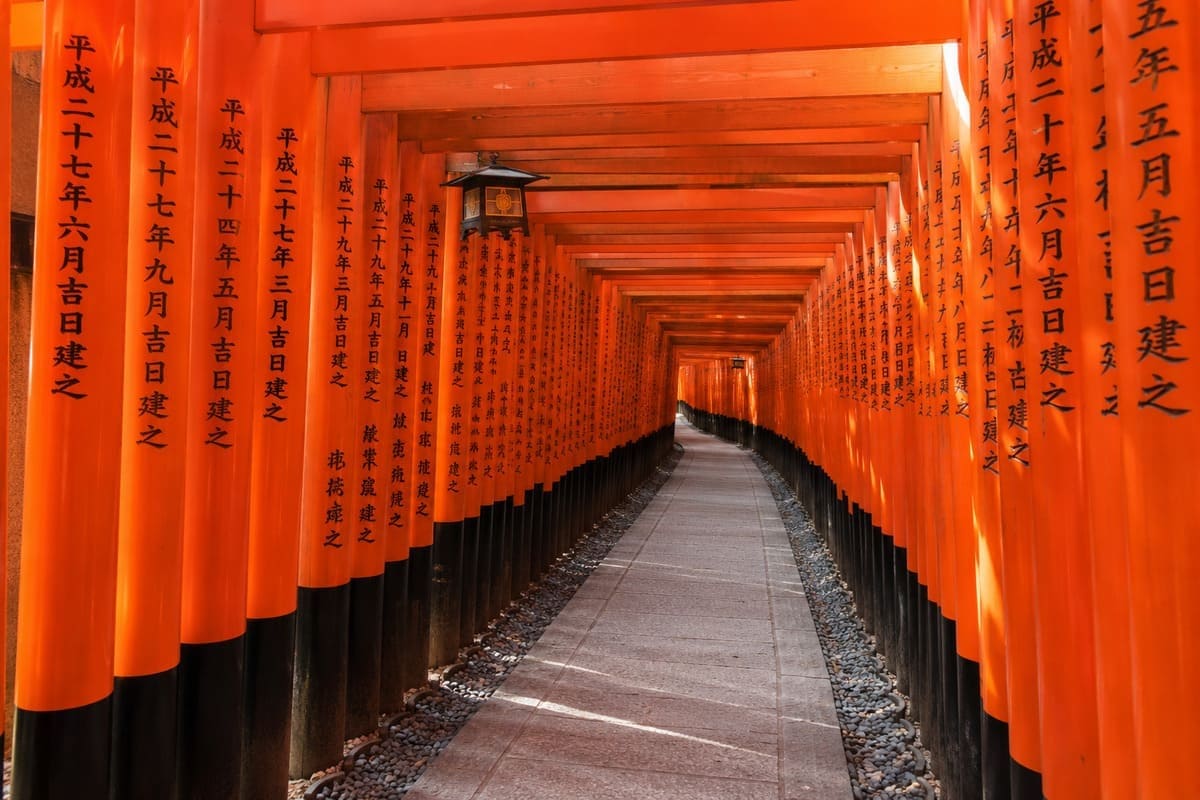
Fushimi Inari
The senbon torii are the most recognizable frames in Kyoto. Red gates contrast with almost any clothing. Farther up the mountain there are fewer people.
Nanzenji / Higashiyama
Nanzen-ji is one of the better places in Higashiyama. The grounds are open and less crowded. The brick aqueduct and the trees make a quiet solo portrait.
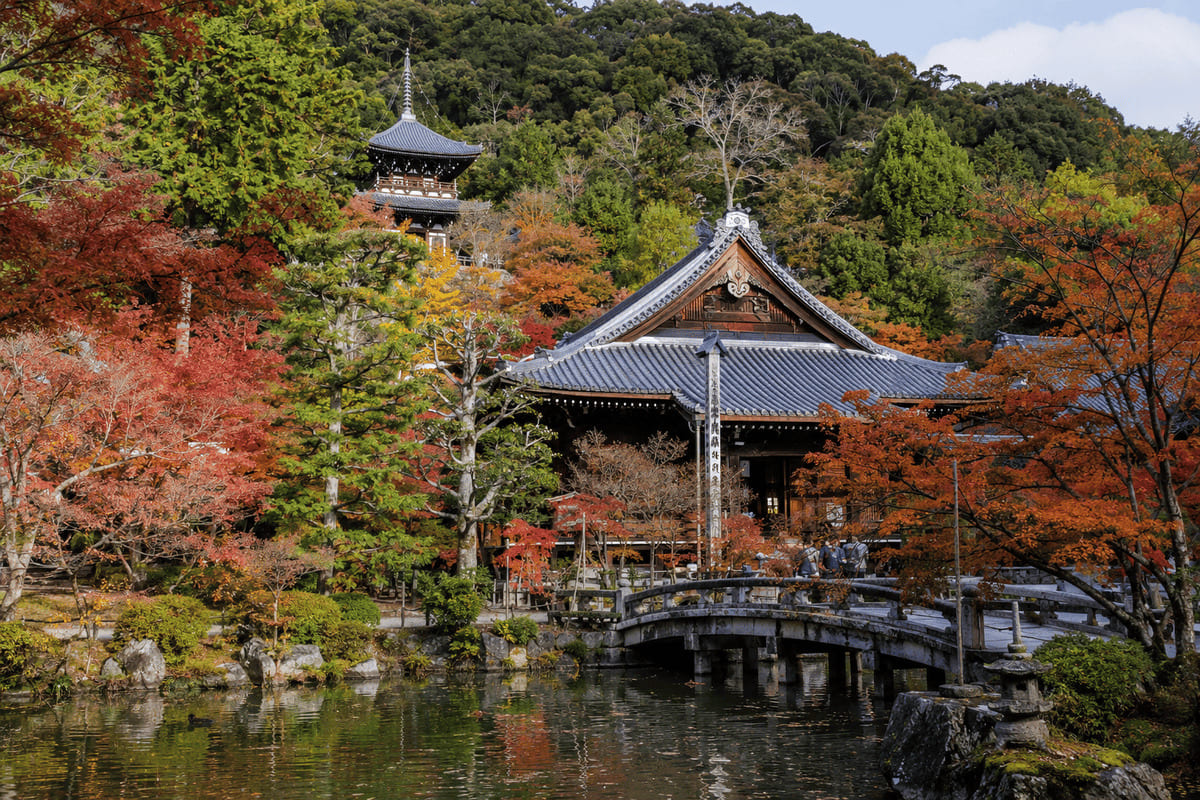
Eikando / Eikando Zenrinji
Eikan-do is known for autumn maple. The corridors, garden, and pond give several frames. Spring green is also worth it, and it is less crowded than Arashiyama.
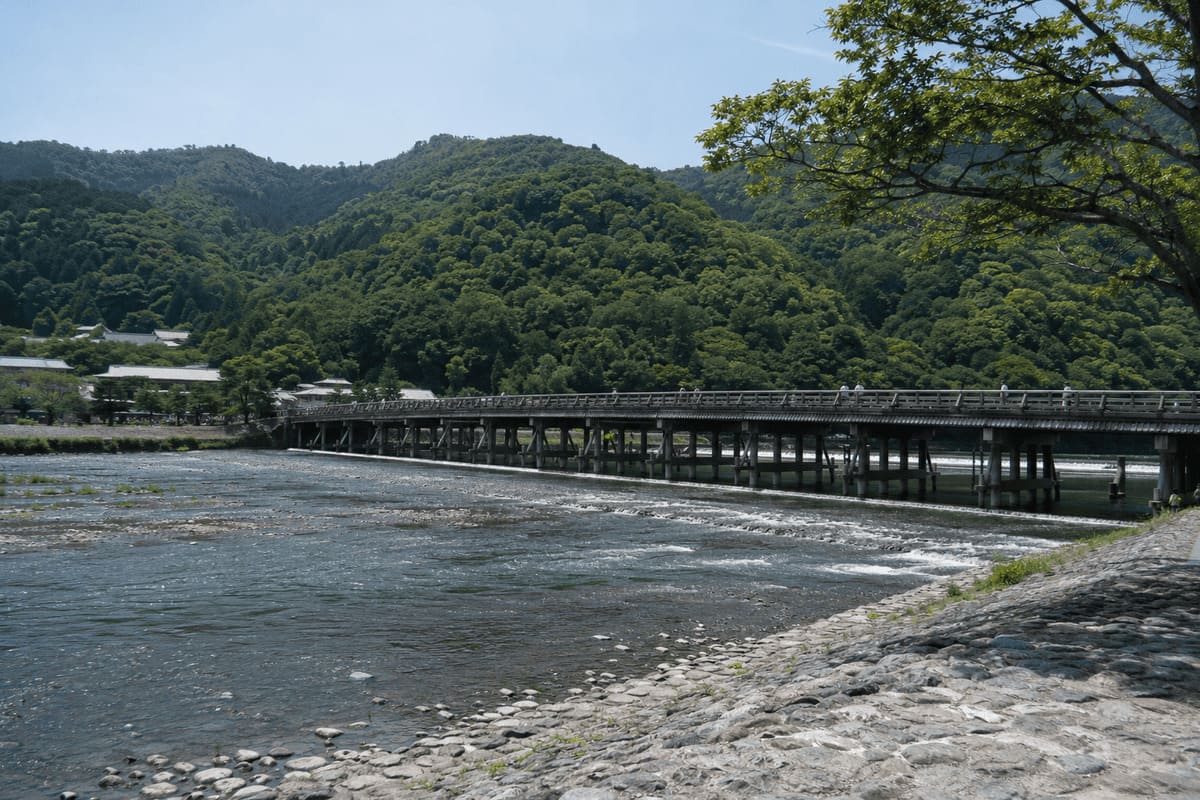
Arashiyama
The bamboo path and Togetsukyo Bridge suit kimono portraits. They are about 30 minutes from the center. The extended package is the practical choice.
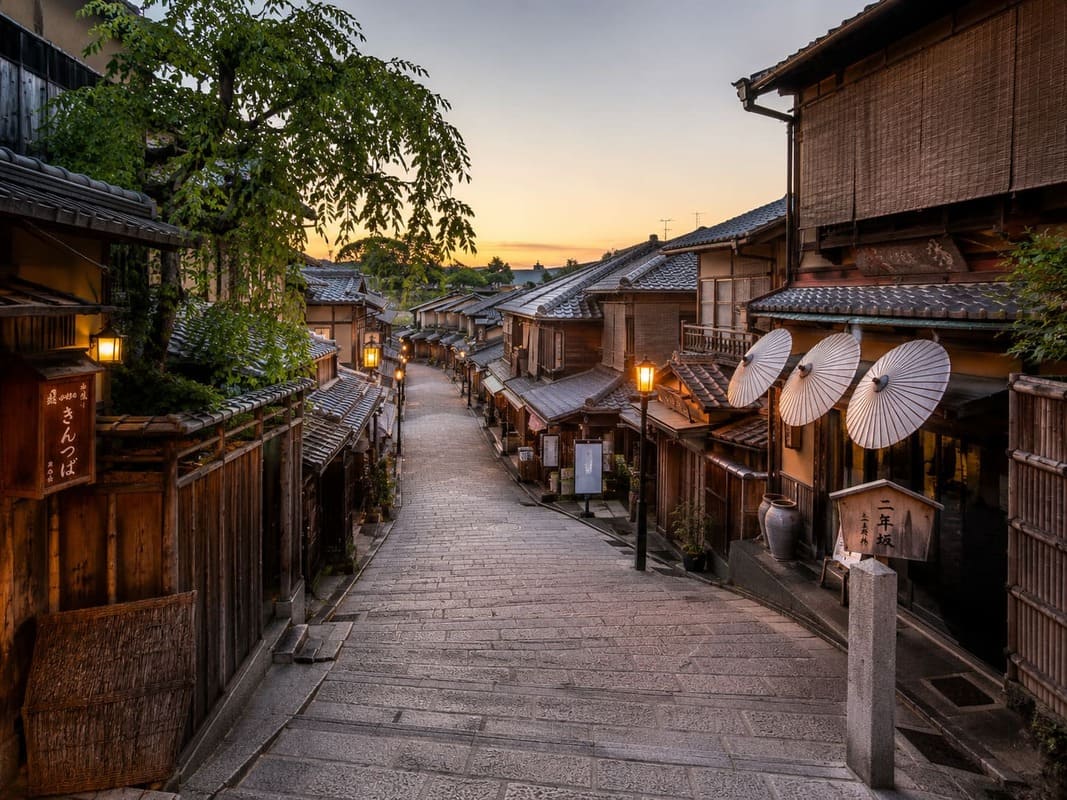
Ninenzaka / Sannenzaka
The stone slope toward Kiyomizu-dera, with wooden buildings on both sides. It suits kimono. Fewer people morning and evening.
Philosopher's Path
About 2 km along the canal. Blossom in spring, maple in autumn. The path is flat.
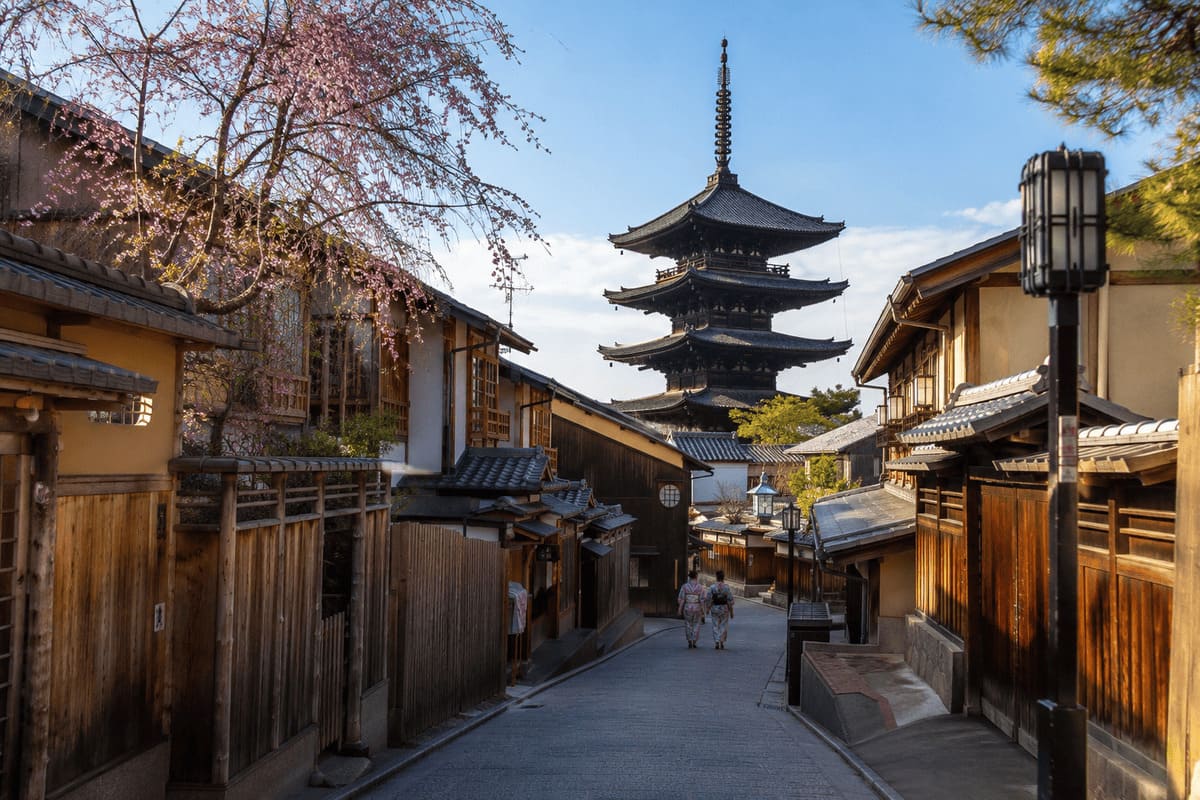
Yasaka Pagoda / Hokanji Temple
The five-story pagoda at Hokan-ji marks Higashiyama. After the lights come on, it suits kimono and solo portraits.